AI-Chain
MCP

MCP

24 articles

Hands-On with GitHub MCP Server: Connecting AI Agents to Repositories, Issues, and Pull Requests with a Minimal Toolset

Hands-On with GitHub MCP Server: Connecting AI Agents to Repositories, Issues, and Pull Requests with a Minimal Toolset

How does GitHub’s official github-mcp-server expose repository, issue, pull request, and CI/CD capabilities to AI agents through MCP? Starting with remote and local deployment, minimal toolsets, read-only access, and lockdown mode, this article outlines a practical engineering workflow that prioritizes clear permission boundaries.
Read More
AstrBot: A One-Stop AI Application Platform Connecting Multi-Platform Chat, Agents, and Plugins

AstrBot: A One-Stop AI Application Platform Connecting Multi-Platform Chat, Agents, and Plugins

AstrBot is an open-source, Python-based multi-platform Agent chatbot and development framework. It brings large language models, multimodality, MCP, knowledge bases, plugins, WebUI, and multiple instant-messaging platforms into one deployable environment. This article examines its architecture, deployment options, security boundaries, and fit for personal assistants, customer service, and team knowledge portals.
Read More
What Is AutoGen Still Good For After Maintenance Mode? A Practical Tour from Core and AgentChat to MCP

What Is AutoGen Still Good For After Maintenance Mode? A Practical Tour from Core and AgentChat to MCP

AutoGen separates multi-agent systems into Core, AgentChat, and Extensions, with AgentTool, MCP Workbench, and AutoGen Studio supporting orchestration from prototype to tool integration. This article examines the architecture, permissions, observability, maintenance-mode trade-offs, and adoption and migration strategies for existing and new projects.
Read More
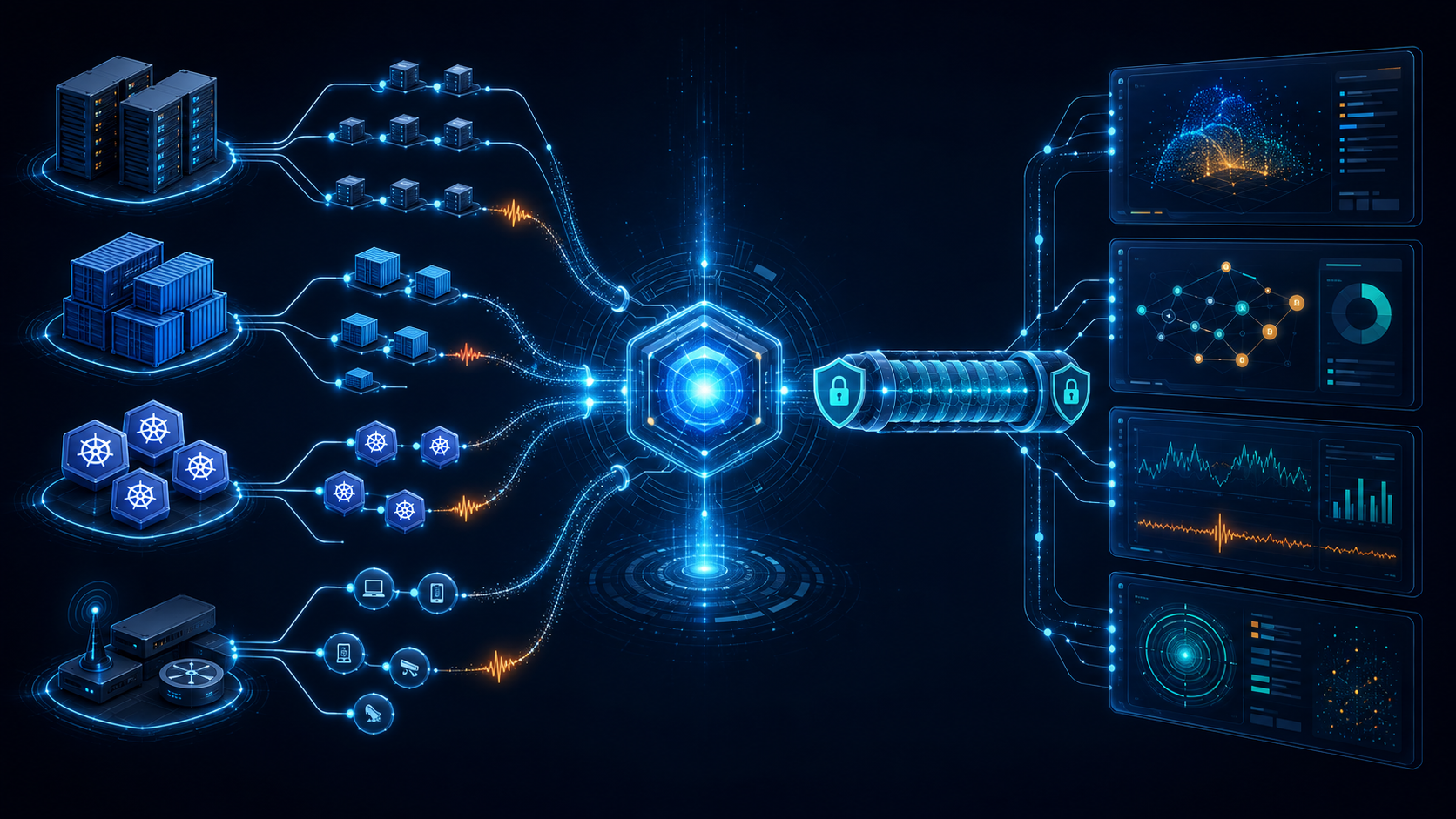
Netdata: Turning Per-Second Observability, Edge ML, and MCP into a Diagnosable AI Observability Platform

Netdata: Turning Per-Second Observability, Edge ML, and MCP into a Diagnosable AI Observability Platform

Netdata is more than another monitoring dashboard: it combines per-second metrics, edge anomaly detection, distributed Parent-Child architecture, and MCP troubleshooting into one operational path. This article explains the Agent data flow, the AI analysis loop, and the network capabilities in v2.11.0, then shows where this 80K-star open-source project fits and what to watch during adoption.
Read More
Let AI Understand the Whole Codebase First: The Knowledge-Graph Approach of codebase-memory-mcp

Let AI Understand the Whole Codebase First: The Knowledge-Graph Approach of codebase-memory-mcp

When an AI coding agent relies on file-by-file search to understand a large repository, it can miss cross-file relationships and consume excessive context. codebase-memory-mcp combines tree-sitter, Hybrid LSP, and a local SQLite knowledge graph, then exposes architecture, call-path, and impact-analysis queries through MCP. This article explains its design, installation, benchmarks, security boundaries, and best-fit use cases.
Read More
Goose: Moving an AI Agent from Code Suggestions to an Executable Workbench

Goose: Moving an AI Agent from Code Suggestions to an Executable Workbench

Goose is more than an AI tool that answers questions inside an editor. It combines models, tools, sessions, and multiple providers into an executable open-source agent workbench. This article covers CLI installation, model configuration, MCP extensions, session management, practical use cases, and the permission and recovery limits teams should evaluate before adoption.
Read More
nanobot:把自架個人 AI Agent 變成可長駐的工作台

nanobot:把自架個人 AI Agent 變成可長駐的工作台

HKUDS/nanobot is a self-buildable personal AI Agent framework developed in Python, integrating WebUI, CLI, chat channel, tools, long-term memory, MCP, sub-agent, scheduling and OpenAI-compatible API. This article summarizes how it moves from a chat robot to a permanent workbench from the perspective of Agent loop, quick start, self-established boundaries and engineering checkpoints.
Read More