AI-Chain
AI Tools Guide

AI Tools Guide

25 articles

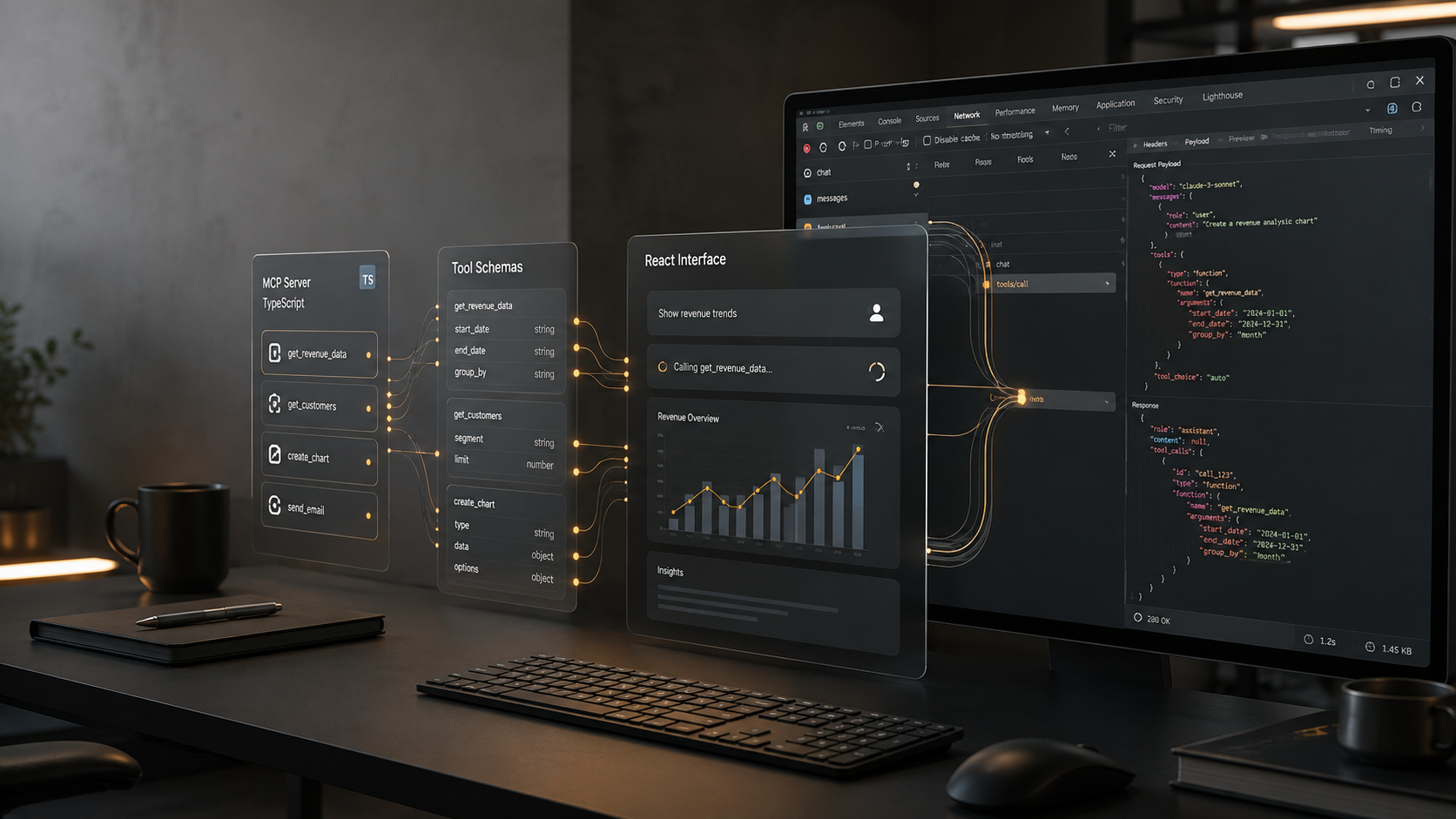
Don’t Treat MCP Servers as Magic: Building a Controlled Tool Integration Layer with the Official Servers Repository

Don’t Treat MCP Servers as Magic: Building a Controlled Tool Integration Layer with the Official Servers Repository

The official Model Context Protocol Servers Repository provides reference implementations for Filesystem, Git, Memory, Fetch, and Time. This article explains how to use it to understand a tool integration layer, while identifying the permission, isolation, audit, and data-governance risks of production adoption.
Read More
Stagehand: Turn Browser Automation into a Verifiable AI Agent SDK with observe, act, and extract

Stagehand: Turn Browser Automation into a Verifiable AI Agent SDK with observe, act, and extract

Stagehand separates browser agents into three observable actions—observe, act, and extract—while retaining a Playwright-style API and SDKs for TypeScript, Python, and Go. This article examines its security boundaries, schema validation, local and cloud-browser workflows, and the situations where high-risk actions should remain under deterministic program control.
Read More
Stop Choosing Models by Feel: Turn LLM Evaluation, Red Teaming, and CI into a Repeatable Workflow with Promptfoo

Stop Choosing Models by Feel: Turn LLM Evaluation, Red Teaming, and CI into a Repeatable Workflow with Promptfoo

The hardest part of maintaining an LLM application is often not connecting a model, but knowing why answer quality changed. Promptfoo brings prompts, models, test cases, assertions, and red-team scans into one CLI and library workflow, so model comparisons, regression tests, and security checks can run locally and in CI/CD. This article builds a practical evaluation process and explains where Promptfoo fits, how to adopt it, and what limitations still require engineering judgment.

Read More
More Than Running Models Locally: How LocalAI Unifies LLM, Voice, and Vision Services Behind One API

More Than Running Models Locally: How LocalAI Unifies LLM, Voice, and Vision Services Behind One API

LocalAI turns diverse inference backends, model formats, and hardware accelerators into a self-hosted service layer. With OpenAI-compatible APIs, on-demand backends, built-in agents, and distributed capabilities, it lowers the cost of connecting local models to real products. This article examines its architecture, deployment path, governance boundaries, and the teams it fits best.
Read More
Stop Treating an Agent as Just a Prompt: How Microsoft Agent Framework Moves Multi-Agent Workflows Toward Production

Stop Treating an Agent as Just a Prompt: How Microsoft Agent Framework Moves Multi-Agent Workflows Toward Production

Microsoft Agent Framework is worth watching not because it wraps another chat API, but because it places agents, workflows, state, human approval, observability, and deployment within one engineering model. This article follows the official documentation and a runnable Python quickstart to explain where it fits, how to begin, and why teams should not start by piling on multiple agents.
Read More
Bringing Chat, Agents, Research, and Local Models into One Workspace: How I Read Odysseus as an AI Workflow Foundation

Bringing Chat, Agents, Research, and Local Models into One Workspace: How I Read Odysseus as an AI Workflow Foundation

Odysseus is more than another chat interface: it brings chat, agents, research, documents, email, notes, calendars, and local-model workflows into one self-hosted workspace. This article uses the official README and Quick Start to examine its practical value, setup path, permission risks, and sensible proof-of-concept projects.
Read More
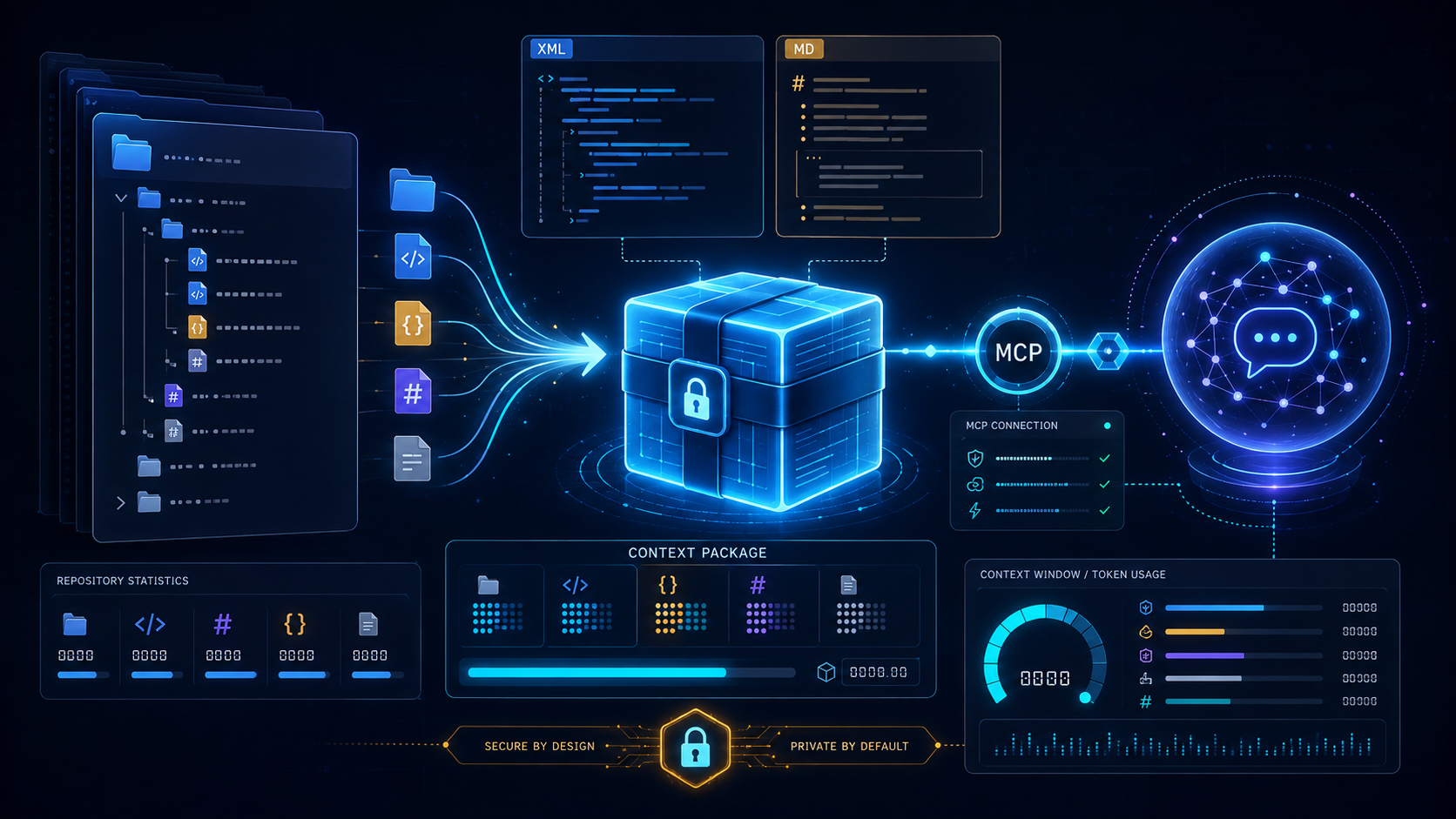
Let an LLM Understand Your Whole Codebase: Build Controlled, Compressed Context with Repomix

Let an LLM Understand Your Whole Codebase: Build Controlled, Compressed Context with Repomix

When an AI assistant sees only scattered files, refactoring and debugging quickly lose context. Repomix packages a repository into XML, Markdown, JSON, or plain text, while bringing file filtering, token counting, Tree-sitter compression, MCP, and security checks into one workflow. This article starts with practical commands and explains how to make it a reliable entry point for AI-assisted code reading.
Read More
Goose: Moving an AI Agent from Code Suggestions to an Executable Workbench

Goose: Moving an AI Agent from Code Suggestions to an Executable Workbench

Goose is more than an AI tool that answers questions inside an editor. It combines models, tools, sessions, and multiple providers into an executable open-source agent workbench. This article covers CLI installation, model configuration, MCP extensions, session management, practical use cases, and the permission and recovery limits teams should evaluate before adoption.
Read More
Unsloth Is More Than a Fine-Tuning Accelerator: Building a Local Workbench for Models, Agents, and Deployment

Unsloth Is More Than a Fine-Tuning Accelerator: Building a Local Workbench for Models, Agents, and Deployment

Unsloth is expanding from a VRAM-efficient fine-tuning tool into a local workbench for running, training, exporting, and deploying models. This article follows its official entry points and explains how Studio, Core, OpenAI-compatible APIs, GGUF, and agent integrations fit together, along with hardware, licensing, remote-access, and security boundaries.
Read More
AI Agent framework with more than 210,000 Stars: Why can Hermes Agent evolve itself?

AI Agent framework with more than 210,000 Stars: Why can Hermes Agent evolve itself?

With over 210,000 stars, 370+ contributors, and nearly 200 merged PRs every week - Hermes Agent is not just another LLM wrapper, it is the first open source AI Agent framework with built-in closed-loop learning. This article provides an in-depth analysis of its self-evolution mechanism, Mixture-of-Agents, and why it deserves your attention.
Read More